
Ruith Cnoc Wind Farm
Low Carbon is proposing a new wind farm development, Ruith Cnoc Wind Farm.
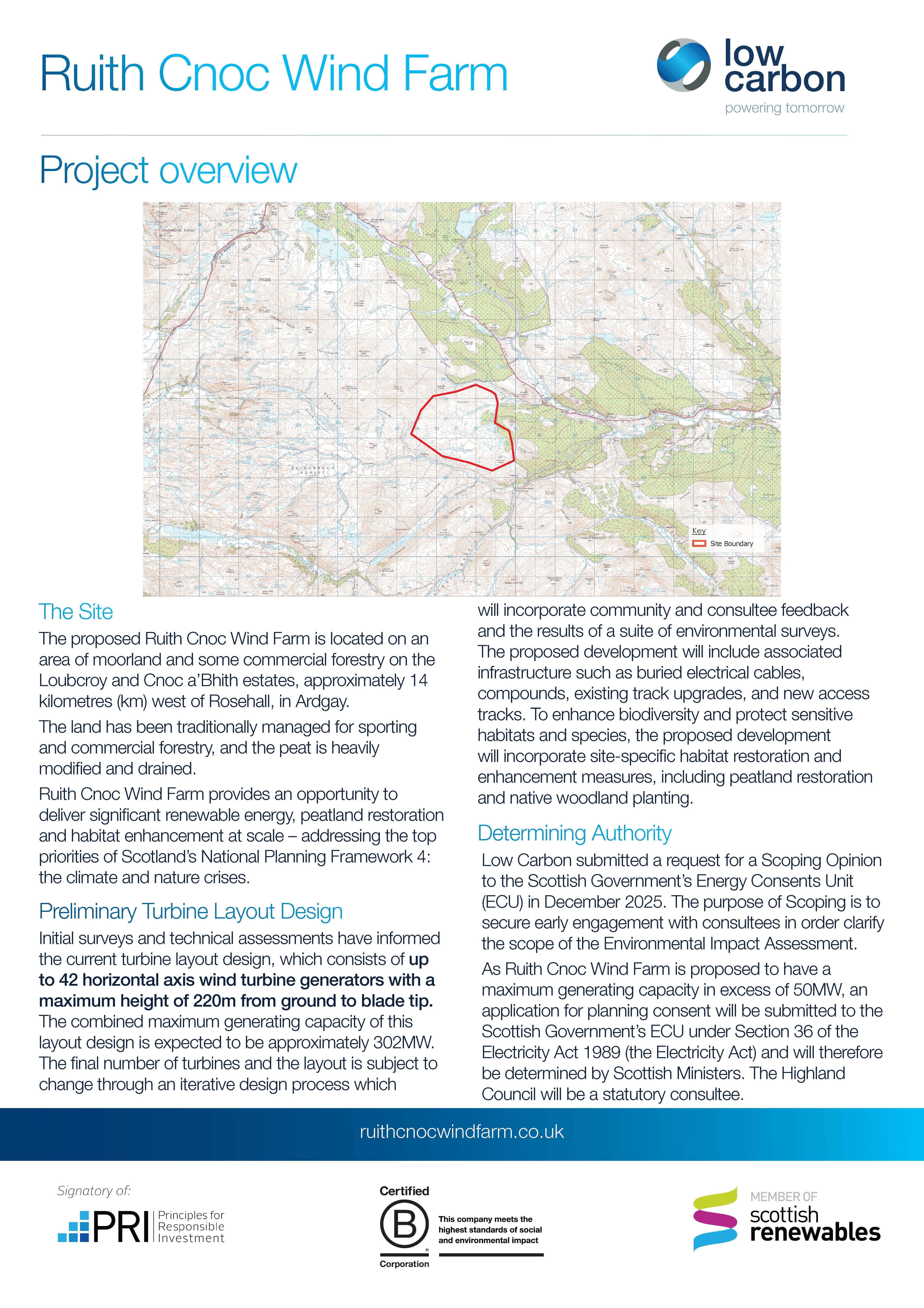
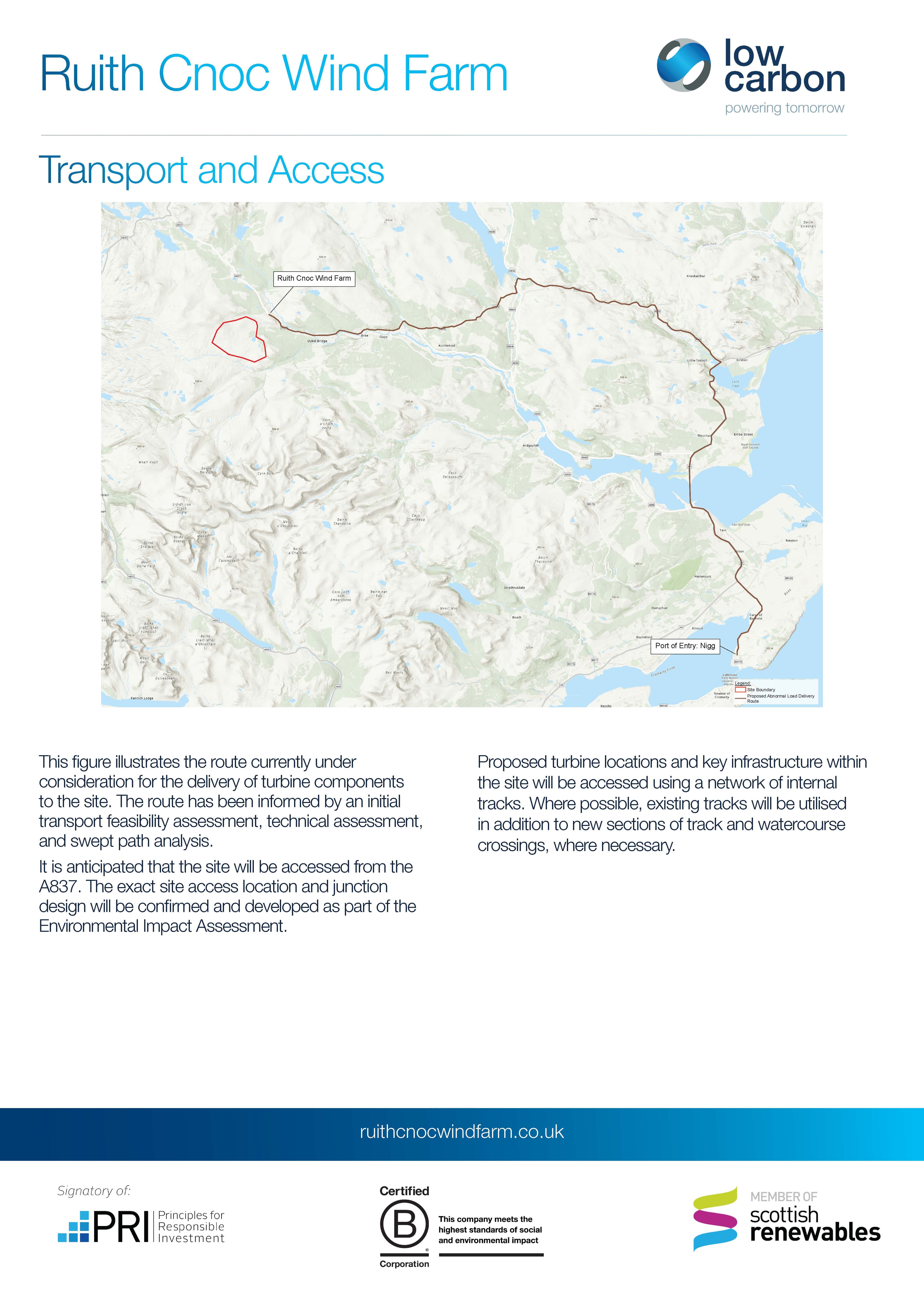
The site is located in Ardgay on an area of moorland and commercial forestry, approximately 14 km west of Rosehall.
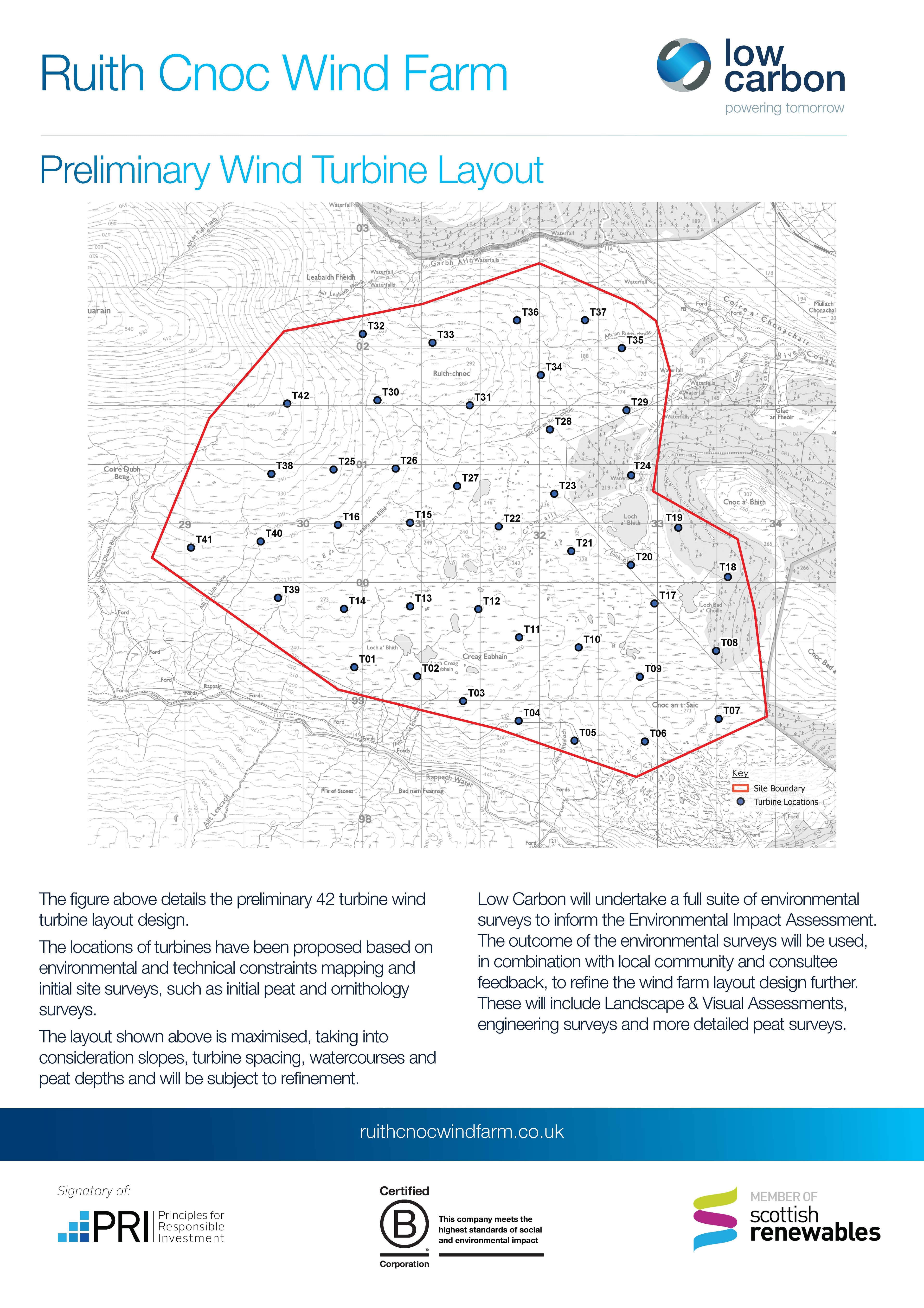
Initial environmental surveys and technical assessments have informed a Scoping turbine layout, which consists of up to 42 turbines with a maximum blade tip height of 220m.
Welcome to
Ruith Cnoc Wind Farm

Lizzie Pike
Senior Project Development Manager
Low Carbon is proposing a new wind farm development, Ruith Cnoc Wind Farm.
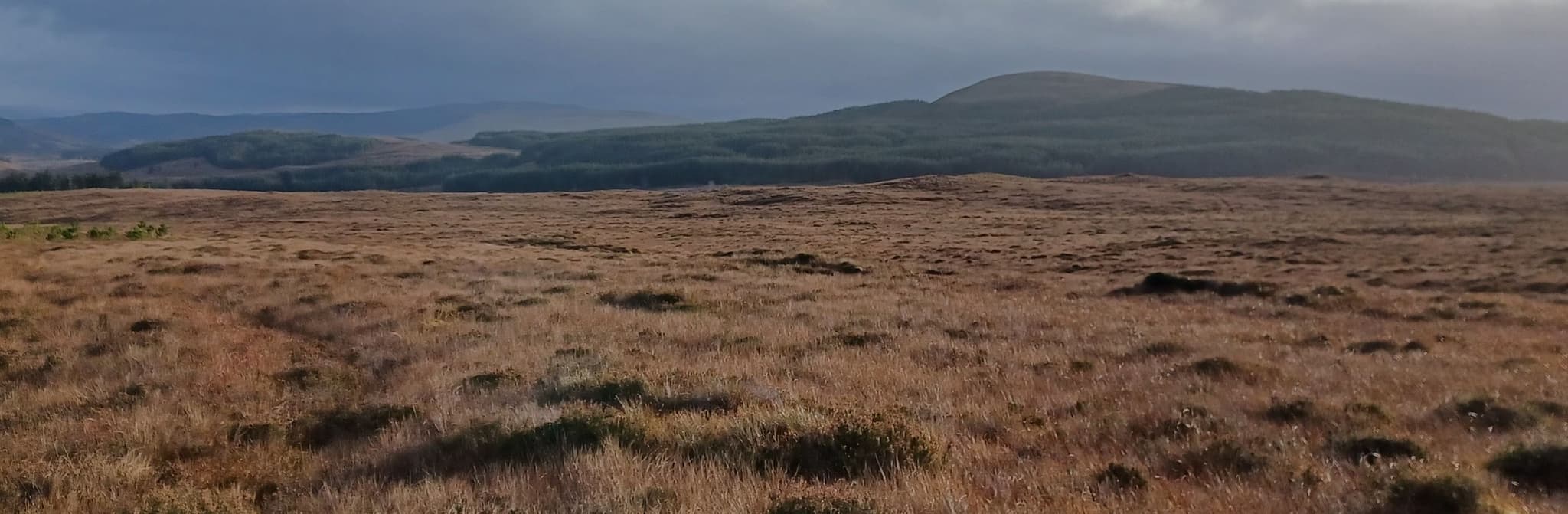
The site is located in Ardgay on an area of moorland and commercial forestry, approximately 14 km west of Rosehall.
Initial environmental surveys and technical assessments have informed a Scoping turbine layout, which consists of up to 42 turbines with a maximum blade tip height of 220m.
The Proposed Development will have a maximum generating capacity of greater than 50 megawatts (MW).
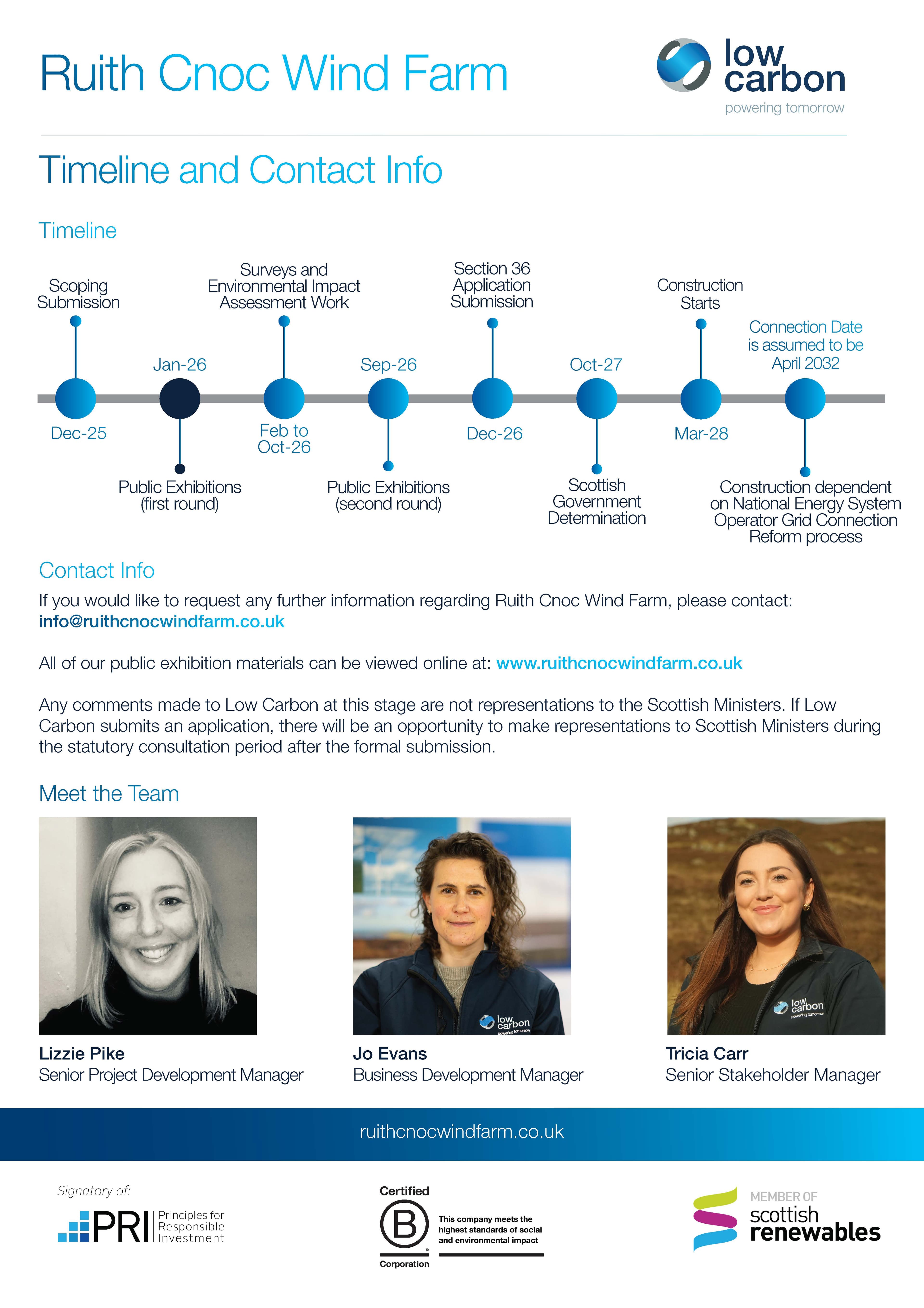
A Scoping submission to the Scottish Government’s Energy Consents Unit seeking consultees opinions on the scope of environmental assessments was made in December 2025.
View the Scoping submission and the Energy Consents Unit’s Scoping Opinion here:
https://www.energyconsents.scot/ApplicationDetails.aspx?cr=ECU00006285
Proposed Development
The Proposed Development is expected to comprise up to 42 stand-alone, three bladed horizontal axis wind turbines. The number and location of the turbines is yet to be finalised and will be subject to an ongoing iterative design process as baseline survey data is gathered.
A co-located Battery Energy Storage System will not be assessed as part of the Environmental Impact Assessment (EIA).
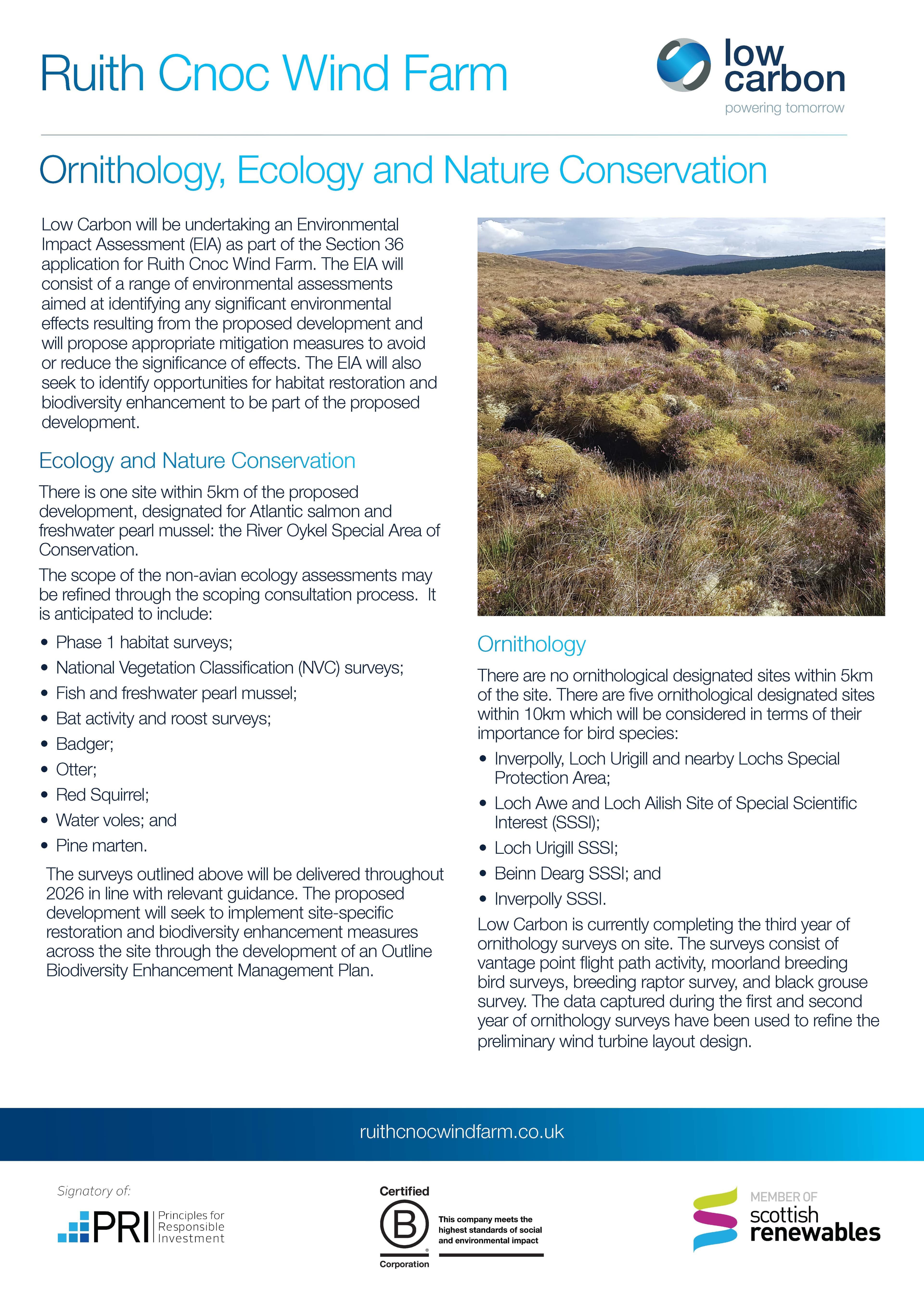
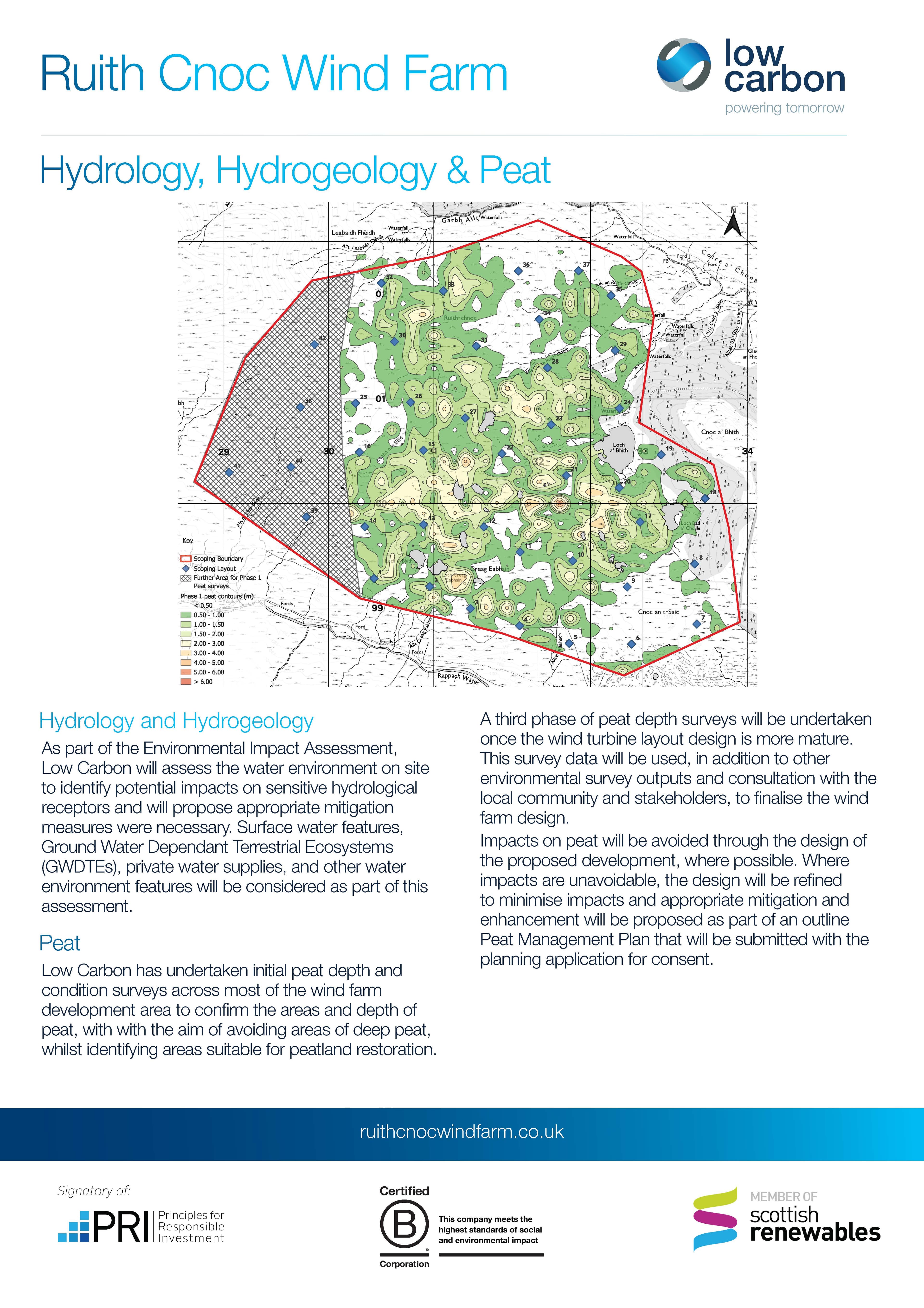
The Proposed Development will include habitat restoration and enhancement measures which will be further defined during the EIA process.
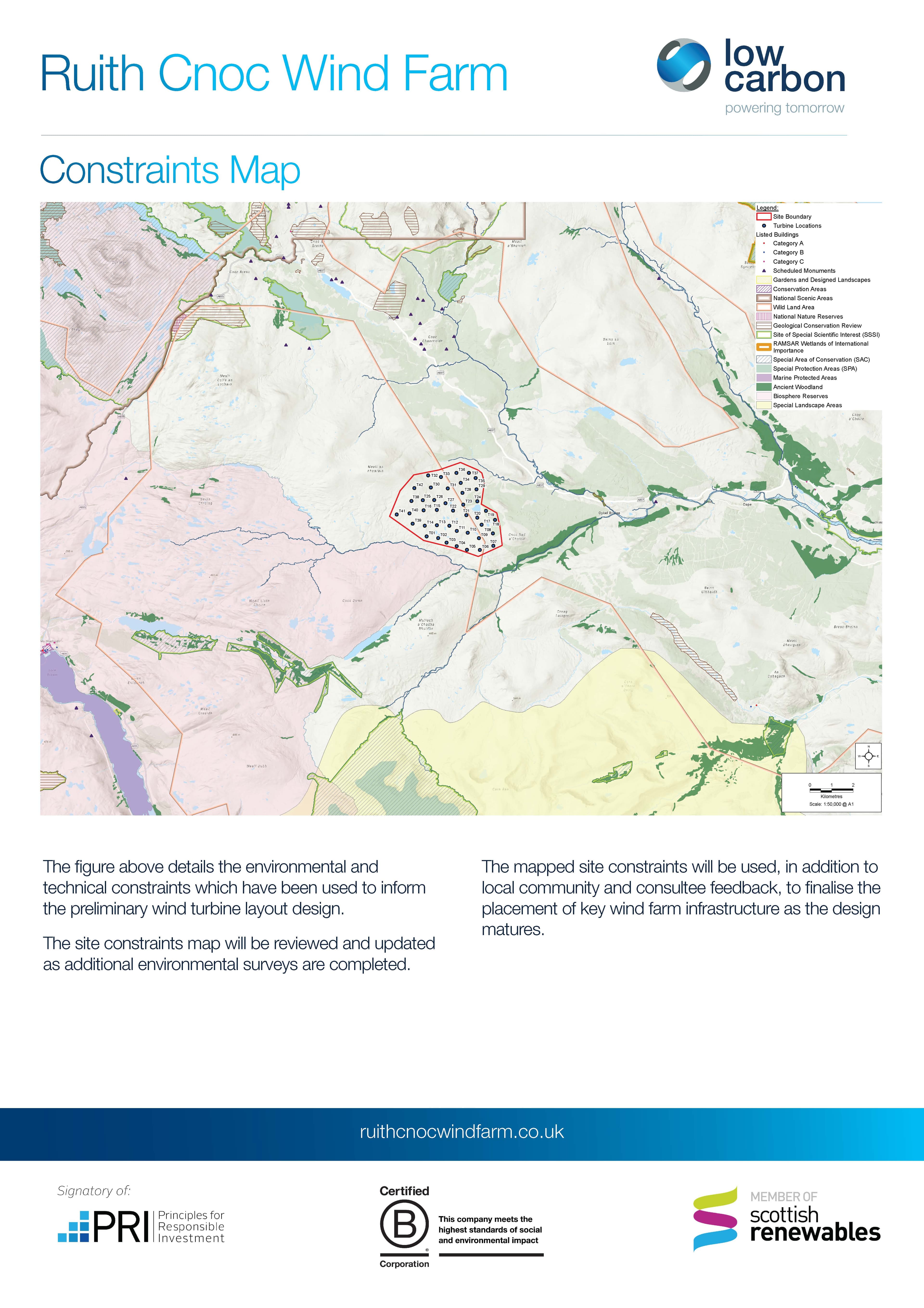
Any predicted environmental effects arising from the Proposed Development will be mitigated as far as reasonably possible. Where necessary, additional specific mitigation measures will be committed to further reduce adverse effects during the construction, operational and decommissioning phases of the development.
Low Carbon champions biodiversity as a critical milestone on the journey towards a low-carbon future and is committed to including within the Proposed Development a comprehensive land and biodiversity management programme, aligned to the unique conditions and circumstances of the site.
Benefits of Low Carbon Development
Across our portfolio of renewable energy projects, we have championed biodiversity as a critical milestone on the journey towards a low-carbon future.
Onshore wind is one of the cheapest sources of electricity in the UK. Cheaper to produce than gas, nuclear, coal and other renewables. Wind resource is plentiful in Scotland and can be utilised to provide security of supply and add to the renewable energy generation mix.
Biodiversity
It is important that the site is improved for nature and demonstrates a biodiversity enhancement, thus helping to protect and improve new and existing habitats.
Planting
Where appropriate, we will look to enhance the site with additional planting of native species.
Livestock Grazing
We work in partnership with our landowners and tenants to accommodate appropriate livestock grazing throughout construction and operation of our wind farms.
Public Rights of Way
We would look to keep public rights of way open throughout construction and operation of the windfarm.
Community Benefit
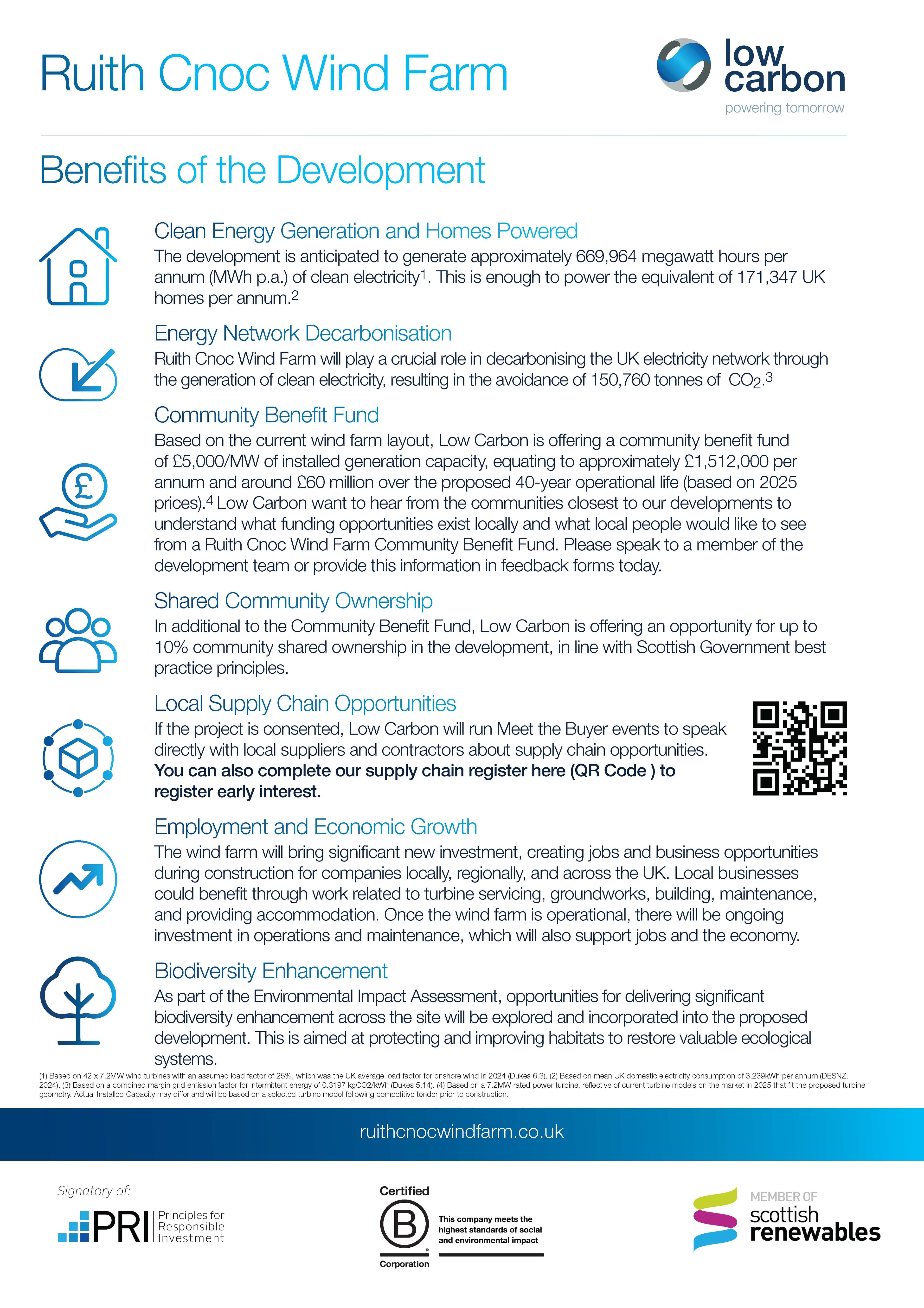
Low Carbon is committed to delivering Community Benefit of £5000 per MW installed per annum (index linked) for the operational lifetime of the project in line with the Scottish Government best practice guidance.
Where there is an appetite, Low Carbon will work with communities to explore shared ownership options.
Supply Chain
A variety of suppliers are sourced throughout the development, construction, operation and decommissioning of a wind farm. Where possible, Low Carbon will seek to appoint suppliers offering local employment and/or apprenticeships. Please contact us to note your interest.
News
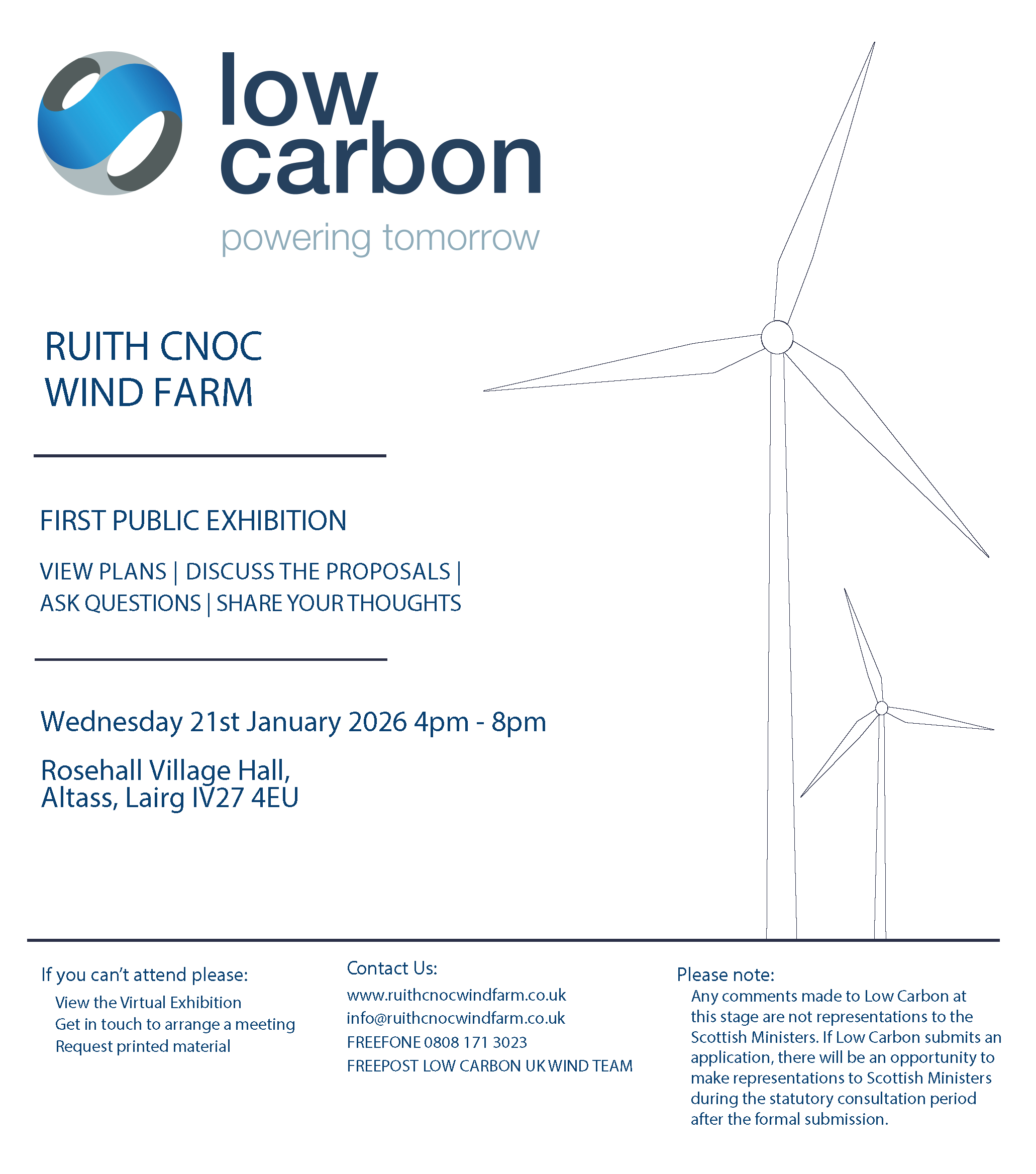
First Public Exhibition 21/01/26
View Plans | Discuss The Proposals | Ask Questions | Share Your Thoughts
Wednesday 21st January 2026 4pm - 8pm
Rosehall Village Hall,
Altass,
Lairg
IV27 4EU
Supply Chain Register
Virtual Exhibitions
We hope this information provides an overview of our current proposals which are at an early stage and will be refined as further studies, site surveys and stakeholder and community engagement is undertaken.
As new information becomes available we will update this section of our website.
If you would like to provide feedback, please do so at the following link:
https://www.surveymonkey.com/r/3GZPLG2
Please note: Any comments made to Low Carbon at this stage are not representations to the Scottish Ministers. If Low Carbon submits an application in relation to the Proposed Development, there will be an opportunity to make representations to Scottish Ministers during the statutory consultation period after the formal submission.
First Virtual Exhibition
First Virtual Exhibition

FAQs
What is onshore wind energy?
Onshore wind energy refers to the generation of electricity from wind turbines that are installed on land, typically in areas such as fields, plains, or hills. These wind turbines capture the kinetic energy of the wind and convert it into electrical energy.
How does onshore wind energy work?
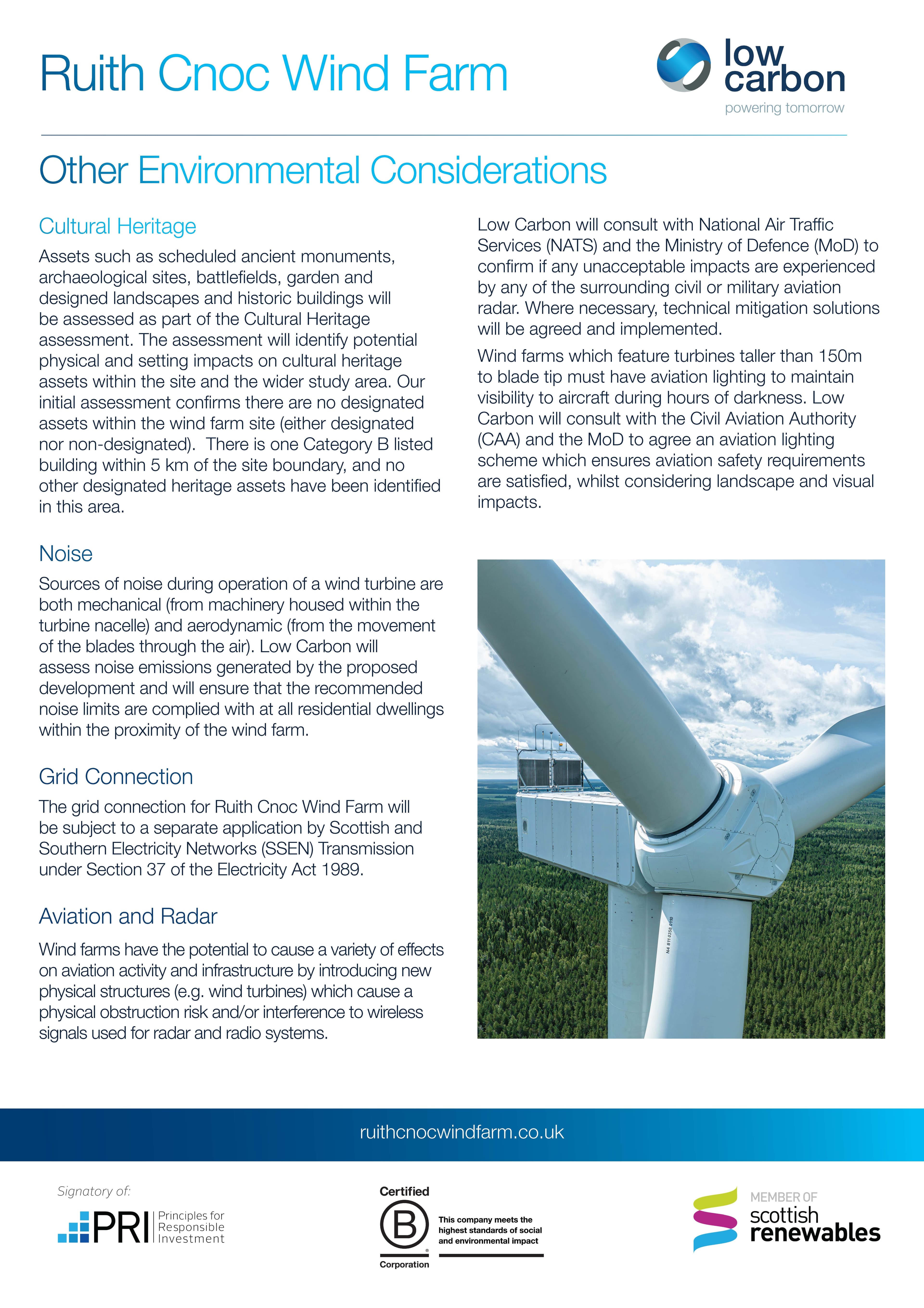
Onshore wind turbines consist of large blades attached to a rotor, which is connected to a generator. When the wind blows, it causes the blades to rotate, which in turn rotates the rotor. The rotation of the rotor generates electricity through the generator, which can then be used to power homes, businesses, or fed into the electrical grid.
What are the benefits of onshore wind energy?
Onshore wind energy offers several benefits, including:
Renewable and clean: Wind energy is a renewable source that does not produce greenhouse gas emissions or air pollution during operation.
Energy independence: Onshore wind reduces dependence on fossil fuels and enhances energy security.
Job creation: The wind energy sector creates employment opportunities in manufacturing, construction, operations, and maintenance.
Cost-effective: Once installed, onshore wind farms have relatively low operational costs compared to other forms of energy generation.
Local economic development: Wind farms can contribute to the economic growth of local communities through tax revenues and land lease agreements.
Where are onshore wind farms typically located?
Onshore wind farms are usually situated in areas with consistent and strong wind resources. These can include open rural areas, coastal regions, and hilly or mountainous terrains. The specific location depends on factors such as wind speed, land availability, proximity to electrical infrastructure, and environmental considerations.
What is the lifespan of onshore wind turbines?
The average lifespan of onshore wind turbines is around 25 years, although with proper maintenance, some turbines can operate for longer periods. Over time, older turbines can be replaced or upgraded with more advanced and efficient models to improve energy production.
Are there any environmental concerns for wildlife associated with onshore wind energy?
Wind farms may affect bird migration patterns and local wildlife habitats, although proper site selection and mitigation measures can help minimize these impacts.
Are onshore wind turbines noisy?
Wind turbines can produce low-level noise, although modern designs aim to minimize this impact.
How much electricity can an onshore wind turbine generate?
The electricity generation capacity of an onshore wind turbine varies depending on factors such as the turbine size, wind speed, and duration of operation. A typical modern onshore wind turbine with a capacity of 2 to 3 megawatts (MW) can generate enough electricity to power hundreds of homes annually.
How does onshore wind energy compare to other renewable energy sources?
Onshore wind energy is one of the most established and cost-effective renewable energy sources. It competes favourably with other renewables like solar energy and hydroelectric power in terms of electricity generation capacity, cost, and environmental benefits. The choice of energy source depends on factors such as resource availability, location, and specific energy needs.
Feedback and Contacting Us
We want to ensure the community local to the Proposed Development is fully informed regarding the plans for the project. We encourage feedback and suggestions to help influence the design of the development. Our project website provides a simple and transparent way for the community to provide feedback.